
Property as an investment
Whether you buy a home to live in, build one, or buy a property to rent, it is usually the largest sum you will ever commit to a single asset. This section sets out what the market is doing, what buying, building and selling actually cost in Manitoba, and what ownership asks of you afterwards.
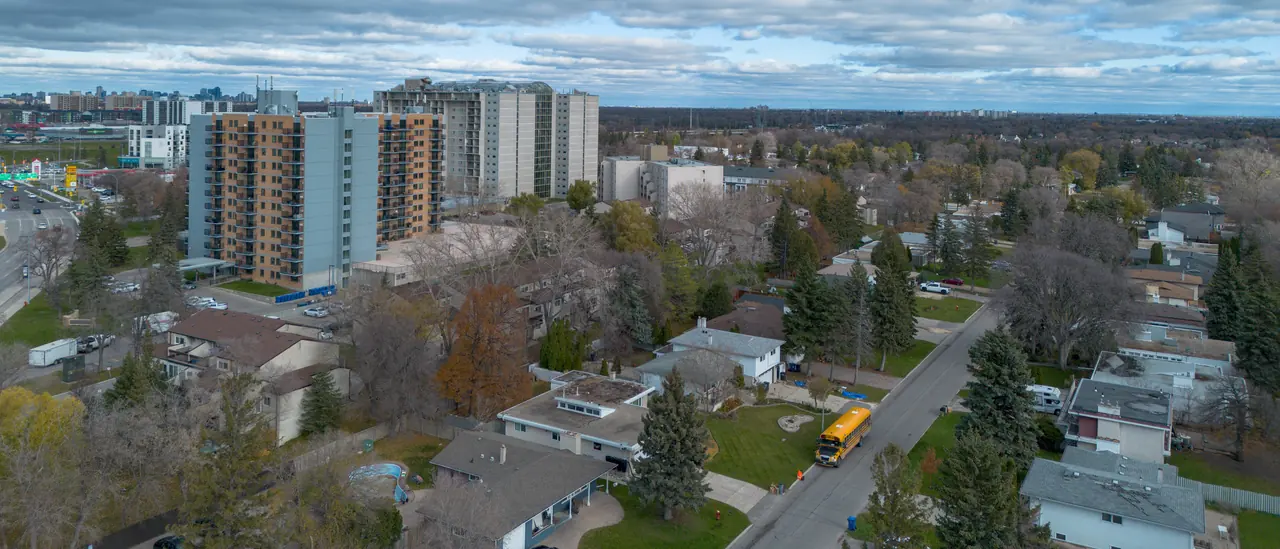
Market & stock
Winnipeg is a mid-priced market inside a national market that has been falling. The figures below are the latest published; each one carries its source and date.
Prices and supply
| Measure | Figure | Change |
|---|---|---|
| Winnipeg region, detached, average price, Jan–Sep | $467,687 | +3% on 2025; 8% above the five-year average |
| Winnipeg region, condominium, average price, Jan–Sep | $288,751 | +2% on 2025; 5% above the five-year average |
| Canada, all property types, average price, September | $666,538 | −1.6% on September 2025 |
| Canada, MLS® Home Price Index, September | — | −3.4% on September 2025 |
| Winnipeg region, MLS® sales, September | 1,250 | −10% on 2025; even with the five-year average |
| Winnipeg region, active listings, September | 4,234 | +14% on 2025; detached listings +20% |
| Canada, months of inventory, September | 4.9 | — |
| Winnipeg region, detached, average price, 2021 → Jan–Sep 2026 Calculated | $379,844 → $467,687 | +23% over the period |
| Winnipeg, purpose-built rental vacancy, October 2025 | 2.8% | Canada: 3.1% |
Calculated The 2021 → 2026 change compares two published WRREB averages: the full year 2021 and January to September 2026. It is a change in average sale prices, not a return on any property, and it ignores the costs of owning, buying and selling.
What the figures say
Stability. Through the first nine months of 2026, Winnipeg-area average prices rose modestly while national prices fell. Listings are up and sales are down, so buyers have more choice than a year ago, and sellers have more competition.
Affordability. The Winnipeg detached average is about 30% below the national average for all property types. The two numbers measure different things, so read the gap as an indication, not a precise comparison.
What the housing stock is made of
| Type | City of Winnipeg | Canada |
|---|---|---|
| Single-detached houses | 57.5% | about 53% |
| Apartments, under five storeys | 18.8% | 18.3% |
| Apartments, five storeys and over | 13.7% | 10.7% |
| Semi-detached, row, duplex and other | 10.0% | about 18% |
Winnipeg's single-detached houses are, on average, 58 years old, and about 63% of homes are owner-occupied (City of Winnipeg, 2025 Housing Needs Assessment). Age matters more than style here: a house built before 1960 can carry clay-soil foundation movement, older wiring and original drain lines that a newer one does not. What to check in an older Winnipeg house.
Owning property compared with real estate stocks (REITs)
General information · not investment advice
A real estate investment trust (REIT) owns income property and its units trade on a stock exchange. Owning a house and owning REIT units are different kinds of exposure to real estate:
| Owning a property | Owning REIT units | |
|---|---|---|
| To start | Down payment plus closing costs | The price of a unit and a trading commission |
| Borrowing | A mortgage usually covers most of the price | Usually bought with your own money |
| Selling | Weeks to months; commission, legal fees, possibly a mortgage penalty | Usually within a trading day |
| Price | Known only when it sells | Quoted continuously; can move sharply from day to day |
| Work | Maintenance, repairs, tenants if rented | None; the trust manages the properties |
| Concentration | One property in one place | Many properties, often in several regions |
| Use | You can live in it | A financial asset only |
Illustration · not a forecast
Borrowing magnifies gains and losses alike. On a $450,000 house bought with $90,000 down, a 5% change in value is $22,500: a quarter of the down payment, in either direction. That is before mortgage interest, property tax, insurance, maintenance and the costs of buying and selling, which reduce any gain and deepen any loss.
I am licensed to trade in real estate, not in securities. For REITs or an investment portfolio, speak with a registered financial adviser.
Buying & building
The price is only part of the cash a purchase needs. These are the amounts that come due in Manitoba, in the order you meet them.
Down payment
- Price up to $500,000: at least 5%.
- Price from $500,000 to under $1.5 million: 5% of the first $500,000 plus 10% of the rest.
- Price of $1.5 million or more: mortgage insurance is not available, so lenders require at least 20%.
- A property you will not live in: lenders usually require at least 20%. Confirm with your lender or mortgage broker.
Mortgage default insurance
Required when you put down less than 20%. The premium is a percentage of the loan and is usually added to the mortgage, not paid in cash. A provincial tax may also apply.
| Down payment | Premium, % of the loan |
|---|---|
| 5% to 9.99% | 4.00% |
| 10% to 14.99% | 3.10% |
| 15% to 19.99% | 2.80% |
Manitoba land transfer tax
Paid on closing, through your lawyer, on the fair market value of the property. The provincial rates have no first-time buyer rebate.
Land Titles registration fees, 2026: $137 to register the transfer and $137 to register a mortgage, when filed electronically ($144 on paper). Fees change each January.
| Portion of the value | Rate | Tax on that portion |
|---|---|---|
| First $30,000 | 0% | $0 |
| $30,001 to $90,000 | 0.5% | up to $300 |
| $90,001 to $150,000 | 1.0% | up to $600 |
| $150,001 to $200,000 | 1.5% | up to $750 |
| Over $200,000 | 2.0% | 2% of the amount over $200,000 |
Costs to get quotes for
- Your lawyer's fee and disbursements and title insurance.
- A home inspection, and a sewer line camera inspection for an older house.
- Condominium document review, if you are buying a condo.
Adjustments on closing
Property tax and some utilities are divided at the possession date. If the seller has already paid the year's tax, you repay the days after possession; if not, the seller credits you for their days. Your lawyer sets this out in the statement of adjustments. How Winnipeg property tax is calculated.
Buying land and building
Building a house or a four-season cottage on your own lot is financed and budgeted differently from buying one that exists.
- Land needs more cash. Lenders typically ask for a larger down payment on a lot than on a house, and more again for raw land without services; ranges of 20% to 35% for a serviced lot, and more for raw land, are common. Ask your lender before you make an offer.
- Construction is paid in draws. A construction mortgage releases money in stages, after the lender confirms each stage is complete. You carry the costs between draws, so the cash plan matters as much as the total budget.
- GST applies to new construction. A new-housing rebate recovers part of the GST on homes up to $450,000, and first-time buyers who buy or build a new home may qualify for a rebate of the full GST on homes up to $1 million, reduced up to $1.5 million. Confirm eligibility with the Canada Revenue Agency or your accountant.
- The lot price is the start, not the budget. On rural and recreational lots, add clearing, the driveway and culvert, the foundation for the site's soil or rock, the Manitoba Hydro service, a well and its water test, and a septic system. Wells, septic and permits on rural property.
- Rules before price. Zoning, shoreline setbacks, minimum building size and any short-term rental rules are set by the rural municipality. Check them before you commit to the lot. What to ask before buying a lot.
Selling finances
What you keep is the sale price less everything that comes out of it on the way to closing. Know the net before you list, not after.
From sale price to net proceeds
- Sale price. Set from recent sold comparables and the condition of the house, not from an online estimate.
- Commission, plus GST. The rate is what you agree in the listing agreement. GST at 5% applies to the commission.
- Mortgage payout. The balance, plus any prepayment charge and the lender's discharge fee. On a closed fixed-rate mortgage the charge is usually the greater of three months' interest or the interest rate differential. Ask your lender for a payout statement before you list; selling near renewal, or porting the mortgage to your next property, can reduce or avoid the charge.
- Legal fees. Your lawyer's fee and disbursements, including registering the mortgage discharge (a $137 Land Titles fee in 2026).
- Adjustments. Property tax and utilities divided at the possession date, as on the buying side.
- Preparation. What you spent getting the house ready. What to fix before selling, and what to leave.
Tax
If the home was your principal residence for every year you owned it, the gain is generally not taxable; the sale is still reported on Schedule 3 of your tax return. A rental or second property is different: the gain is taxable, and selling costs reduce it. Confirm your position with an accountant before you sell.
Burden & risk
A share in a fund asks nothing of you after you buy it. A house does. The ongoing cost and the risk you take on at purchase belong in the same calculation.
What ownership asks of you
Carrying costs. Property tax, frontage levy, heating, hydro, water and sewer, and insurance, every month whether or not anything breaks. What it costs to own a house in Winnipeg.
Replacements. The large bills come from components wearing out. Typical service lives, under normal conditions and regular maintenance:
| Component | Typical life |
|---|---|
| Asphalt shingle roof, three-tab | 20 years |
| Asphalt shingle roof, architectural | 30 years |
| Gas furnace | 15–25 years |
| Central air conditioner | 7–15 years |
| Heat recovery ventilator | 20 years |
| Water heater, tank | 6–12 years |
| Vinyl windows | 20–40 years |
| Electrical service panel | 60 years |
| Poured concrete foundation | 100+ years |
These are guidelines, not guarantees, and they are not specific to Manitoba. On Winnipeg's clay soils a foundation rarely wears out; the risk is movement and water, which grading and downspouts control. Build your reserve from this list: note each component's age, estimate when it falls due, and set aside its replacement cost over the years that remain.
Time. Seasonal checks, snow, grading, and arranging trades; on a rural property, also the well and the septic system. Seasonal care.
Managing risk when you buy
- A first look at the building. At a showing I look at grading, foundation walls, the electrical panel, plumbing and drain materials, and the attic where I can. It is a first screen, not an inspection: a licensed home inspector, and an electrician or structural engineer where needed, settle the questions it raises.
- Permits. A finished basement, an addition or a structural change should have closed permits: the City of Winnipeg inside the city; outside it, the municipality for building work and Manitoba Hydro for electrical. Checking before you commit avoids inheriting unpermitted work.
- Before buying land to build. Lot elevation and drainage, soil or bedrock, the distance to power and road access, and what the builder's specification actually includes. These decide the real cost of the project more than the lot price does.
- Conditions in the offer. Financing, inspection and, for a condo, document review; for land, conditions on zoning, permits and servicing. How many conditions a seller will accept depends on the market; with listings up in 2026, buyers have more room than in recent years.
- Financing at renewal. Lenders already qualify you at a rate above your contract rate. Test your own budget the same way: would the payment still work if the rate at renewal were higher?
- Resale. Location, layout, lot and condition decide how quickly a property sells when you need it to. In September 2026 detached listings were up 20% on a year earlier while sales fell, which is a reminder that you will compete with other sellers when you leave.
How to read the figures
- Unlabelled figures are published by the source listed below, as read on the date shown.
- Calculated figures are worked out from published figures; the note beside them says how.
- Illustrations show how a mechanism works with round numbers. They are not forecasts and not a promise of any result.
- Estimators use the numbers you enter and the published rates. They are estimates, not quotes.
General information only. Not financial, investment, legal or tax advice, and not an offer or a promise of any return. I am a REALTOR® licensed to trade in real estate in Manitoba; I am not licensed to advise on securities. Figures can change after the date they were read. Before you rely on any of them, confirm them with your lender, lawyer, accountant or a registered financial adviser.
Sources
- Winnipeg Regional Real Estate Board, September 2026 market release, 6 October 2026.
- Canadian Real Estate Association, national statistics, 16 October 2026.
- Statistics Canada, 2021 Census of Population, City of Winnipeg profile; national shares as reported by The Canadian Press.
- City of Winnipeg, 2025 Housing Needs Assessment: At a Glance.
- CMHC, mortgage loan insurance premiums.
- Province of Manitoba, Land Transfer Tax.
- Financial Consumer Agency of Canada, prepayment penalties.
- Canada Revenue Agency, reporting the sale of your principal residence.
- Canada Revenue Agency, first-time home buyers' GST/HST rebate.
- Manitoba Hydro, electrical permits and inspections.
- WOWA, mortgages for land (typical down payments; lender policies vary).
- CMHC, Rental Market Report, fall 2025 (October 2025 survey).
- Winnipeg Regional Real Estate Board, 2021 year-end market release.
- Teranet Manitoba, Land Titles fee schedule, effective 4 January 2026.
- InterNACHI, Standard Estimated Life Expectancy Chart for Homes.
Figures read 28 October 2026.